


If you’ve been hiking west of Carson City in the last couple of weeks, by Ash Canyon or Kings Canyon Waterfall, you may have noticed a big herd of sheep grazing in the hills. To long-timers in Carson City, finding sheep out on these hikes is no surprise, as sheep have been brought in annually to eat up the invasive grasses that become wildfire fuel for 20 years now. What’s different this year is the season — this is the first year the Carson City fuel reduction program is using sheep in the fall in addition to the normal grazing that occurs in spring.
As wildfire threats continue to grow in the region, adding a fall grazing period makes the long stretch between the end of summer and the snow season (which varies greatly every year), a much less risky time for wildfires around Carson City. It’s certainly comforting to know local government is being proactive about amping up fire prevention through environmentally friendly means.
A Brief History of the Program
In 2004 a terrible fire, now known as the Waterfall Fire, engulfed western Carson, burning more than 8,000 acres, destroying 17 homes and even resulting in the loss of life.
The area west of Carson, like much of Nevada, is mostly public desert land that is open for hiking and other recreation. Fire risks are not as high as the dry forested areas near Lake Tahoe and throughout much of California, but the mix of sage brush, grasses and some trees, coupled with extremely dry conditions, can still be highly destructive, as the Waterfall fire showed. By 2006 Carson City started grazing sheep to reduce fuels in the region and has continued doing so successfully ever since.

Benefits of Sheep over Other Methods
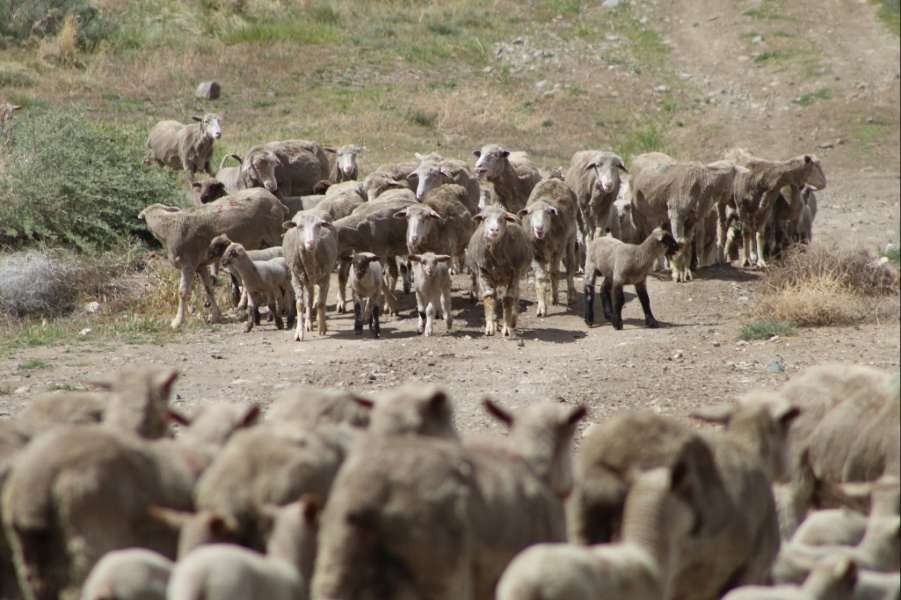
Sheep grazing brings many benefits compared to controlled burns and using machinery to thin out wilderness areas. For starters, there’s no air pollution and no risk of growing out of control (other than the occasional lamb straying from the herd). Likewise, there’s no need to bring in heavy machinery or large vehicles that can tear up pathways and lead to erosion.
While these sheep are domesticated Eurasian breeds, they share some characteristics with wild Nevada sheep that make them environmentally friendly ruminant animals in this terrain. Their palates are well suited to the invasive grasses that become the starter fuel for large fires, and they swiftly gobble them up. Suited to rocky, barren terrain like wild sheep, they move across the landscape easily and without disturbing the delicate flora and soil (unlike horses and cows that unfortunately are highly destructive to Nevada’s open rangeland). Furthermore, their thin, pointed hooves break up the soil as they walk, helping to make more nutritious soil for small plants to sprout.
How You Can Help Make This Successful
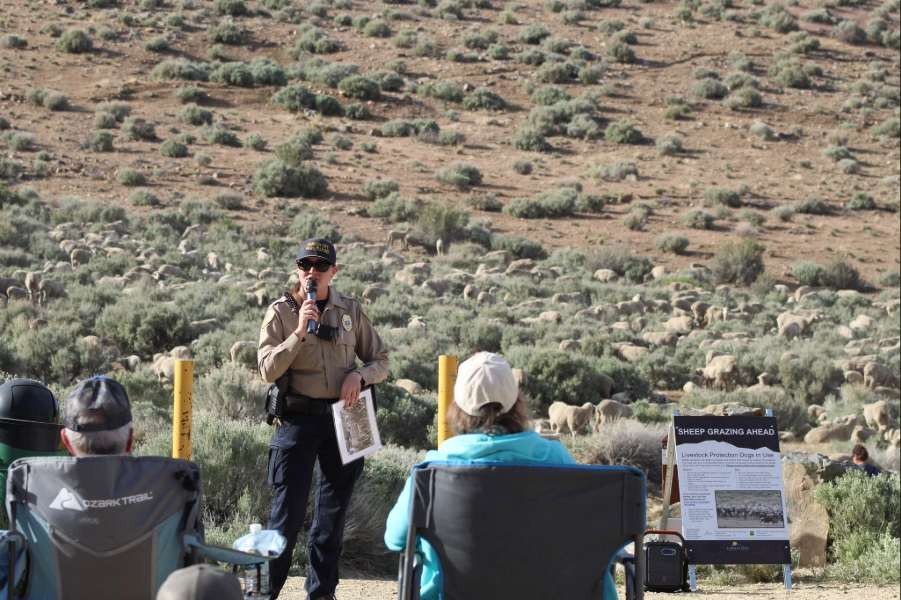
If you happen to be out when you notice the sheep nearby, the best thing you can do is leave them alone, give them plenty of space and — most importantly — put your dog on your leash if you have one with you. Unleashed dogs spook the sheep (they are herded by dogs) and can cause the herd to move away from its designated grazing location.
Some helpful hikers also notice stray lambs and get concerned. Most of the time, it’s best to let the lamb find its way back to the herd on its own, but in the rare case that a sheep or lamb ends up far away in a neighborhood, you can call one of the numbers listed on the Sheep Project website.
Other than that, there’s no need to entirely abandon the trails when the sheep are present. Some hikers, like myself, even enjoy the aura created by the baaing and sheep bells and the presence of these harmless creatures. Sheepherding was brought over from Europe by the Basque and is an important part of Nevada history. Because wool and sheep meat aren’t the hot commodities they used to be, however, they’ve mostly disappeared — so it’s good to see them making a comeback and serving a new purpose.
The Sheep Project shows that Northern Nevadans are doing a great job as stewards of the local environment, mitigating wildfire risks to the region in the best way possible.
Photos courtesy of Carson City Parks, Recreation & Open Space Department Facebook
For more information, go to Sheep Project | Carson City.
About the Author Dan Bablinskas
 Dan Bablinskas is a relentlessly curious person with a passion for travel, foreign languages, affordable food and lodgings, well-fashioned cappuccinos and refreshing craft brews. After receiving his bachelor’s degree in creative writing, he traveled through Europe and South America while working as an English teacher and travel blogger. After trying a number of different careers, he settled into technical and content writing for his day job. In his spare time, he enjoys exploring the Reno-Tahoe area by foot, car, bike and ski. He lives in Reno with his wife and two kids.